

Mykki Blanco: Part One
The rapper, performance artist, nomad and long-distance walker returns
Sometime in the mid 2010s, in the network of bunkers between east and north London, Mykki Blanco’s “Coke White, Starlight” made its presence known. Five minutes longer than any club track of the era, its darkly sexy dub progressions carved a path through Krautrock, Suicide, and Memphis Rap. The Orange County singer, writer, performance artist and hiker’s opening statement felt genuinely new, and still does.
Ten years, three full lengths and a 2024 masters degree in Fine Arts from the University of Applied Sciences and Arts in Switzerland later, Blanco returns with Cafe Paradiso, a project set in an imaginary afternoon diner, inspired by the three cities he spends most of his time between: New York, Paris and Tangier. It’s a lighter drift than Mykki-typical, powered not by the 808 kicks he made his name with in the 10s, but live drums and slow-swinging bass.
Among some of his daily obsessions, the artist takes Another Man to the origins of Cafe Paradiso, which comes out in September.
Congratulations on Cafe Paradiso. How did the idea of its central setting, an imaginary cafe, emerge?
Mykki Blanco: The album was made with two trains of thought. Sonically, I wanted to make a festival record, music that was going to be really fun to play live, and I had actually never done that before. Producer Drew (Lustman, also known as FaltyDL) and I have been working together for eight years now, so we have a very kind of psychic symbiosis kind of thing going on. There is a lot of spontaneity in how we approach each day. Having this element of live drums, too, was really important to me, so that was the second thread. I started to really enjoy storytelling on this album and feeling like with each individual song, I was crafting a vignette.
I like to tell an entire story in my lyrics. With “Little Beat”, for example, I knew that I had never made a song that sounded like that, and I always wanted to. I thought, well, it does feel like these songs could be future classics that could all come out of the same jukebox, and I started thinking about this fictional jukebox. I created a diner, Cafe Paradiso, that mirrored a mood that I often feel when I am in these third spaces. I’m talking about being in places like dive bars, a diner or a cafe with my headphones on, journaling or listening to a record – a very interior process. At Paradiso, it’s permanently 4 o’clock. It’s never early, and it can’t be later than 5pm.
1LDK
They’re a new Japanese duo. She’s Beijing born, he’s from Amsterdam and they’re based in Tokyo. She’s a friend of mine. The music is absolutely nuts. Their name stands for (one bedroom, plus a combined living, dining, and kitchen area). They’re making electro pop revival-ish stuff, but the music feels really original and pertinent. It doesn’t feel overly nostalgic, but it is also familiar-sounding. The song that really snared me is called Femme Fatal. When you hear a new artist that is so damn good at the thing they’re like doing, it’s always really impressive. I don’t know where they’re going to go, sonically, next. I’ve known (lead singer) Yiqing since 2022 or 2023, but I like the fact that she was doing this before then, and it’s just coming out into the world now.
Carlos Santana
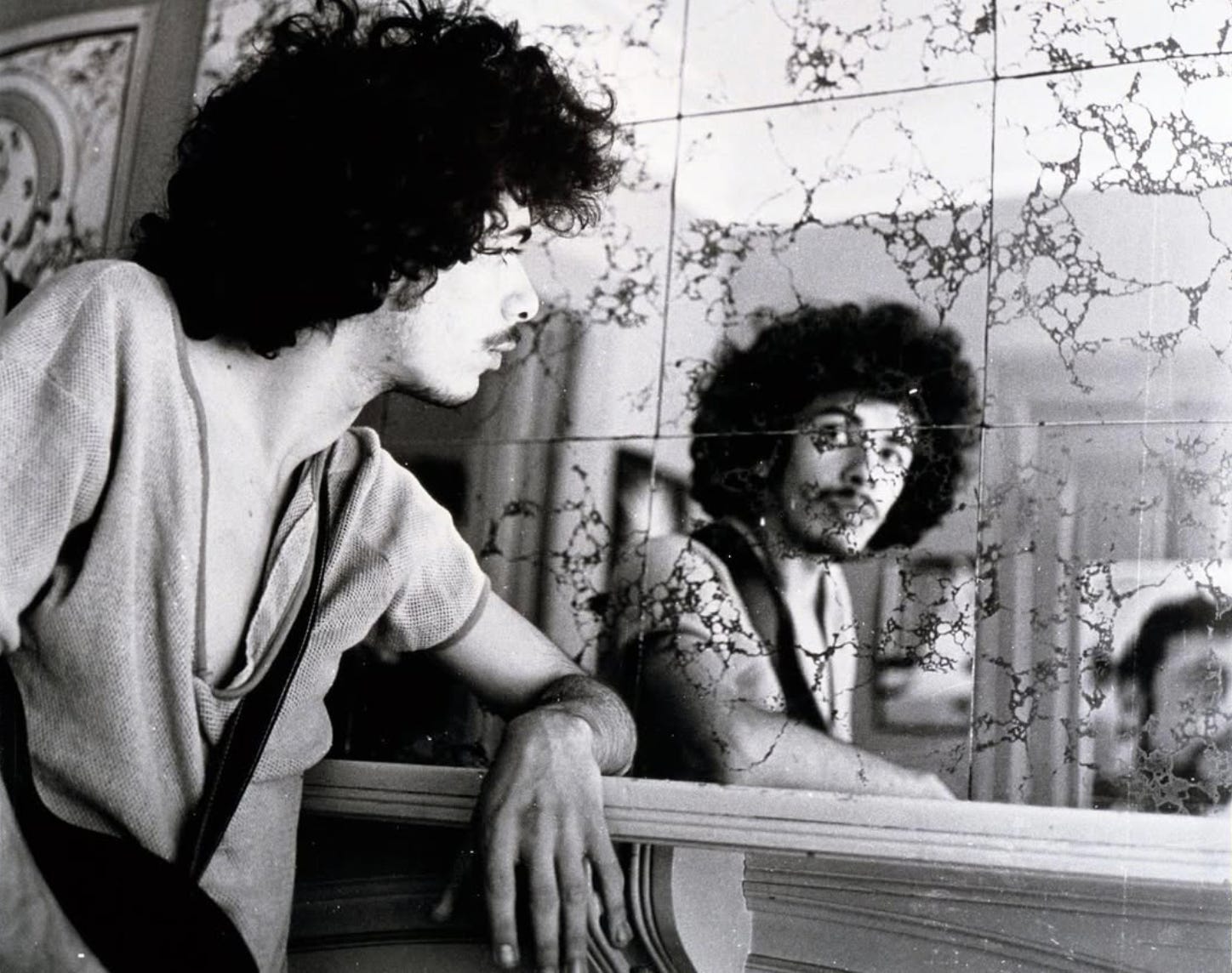
I was introduced to Carlos Santana by my Dad at such a hardcore early age. Even though Santana was a guitar player, I think if there’s anyone that I associate with percussive music, it’s him. He probably turned me onto Fela Kuti in college, too, at ages 18, 19, or 20.
Harlem and Moscow, the podcast
When I was doing my master’s degree at the Art Academy in Basel, my thesis was on the African American presence in the Soviet Union, after the Bolshevik Revolution. Post-revolution, (the government) were recruiting Black American agriculturalists, scientists, people to come over and help them rebuild their own kind of cotton belt in Kazakhstan, and Uzbekistan. It was one of the most horrific eras of the early 20th century for lynchings, but it was also a really opportune time for Black professional people to come to the union for work, and many of them stayed. During this period, the seeds of what would be considered early Black radicalism (were sown). The Harlem and Moscow podcast is a six-part audio drama from the Grio network, and it tells the story of 22 Harlem Renaissance artists brought to the Soviet Union. It’s a fictionalized narrative from the perspective of a writer, a real person named Dorothy West. By this time, this was later in the 20s, the Soviet Union were trying to use these artists to create a contrast; it was propaganda. There was a film that was supposed to be made called Black and White, and the point of it was to turn large swaths of Black Americans into communists. The film was never made, and the podcast talks about how artists in the 1920s and 30s were used to exploit racial injustices for propaganda.
Maximum phone brightness
Sadly, I’m part of a generation of people whose eyes are screwed from prioritizing their phone battery over their eyesight for the past 20 years. These days I refuse, and carry one of those Amazon eight hour battery packs. I grew up wearing glasses, so already my eyes were fucked, and now I wear clear contacts. At one point last year I was like, It’s psychotic that I’m walking around blind. I’m getting headaches sometimes, because I prioritize my phone battery over all else. Let’s all just be boomers and keep our brightness up all the time. We need to prioritize our eyes over our phones.
Stay tuned for part two of Mykki’s Obsessions Index.